

In international business, choosing the right shipping container and making a good loading plan is very critical. It directly affects your shipping cost and the safety of your goods. To help you plan your logistics budget and Minimum Order Quantity (MOQ) better, we specially summarize this complete and practical guide about container knowledge based on our factory exporting experience.
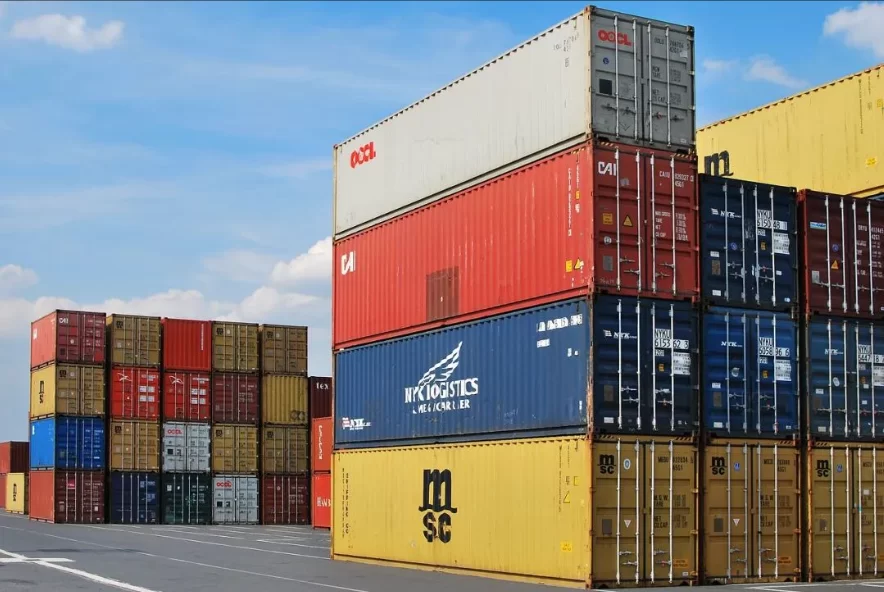
1. Common Container Types and Their Best Uses
According to different cargo weight, volume, and loading requirements, international shipping mainly uses these types:
- General Purpose Container (20GP / 40GP): This is the most standard fully closed container. It is windproof and rainproof. It is suitable for most general goods that do not need temperature control, such as daily commodities, hardware products, lighting items, and general accessories.
- High Cube Container (40HQ / 45HQ): The width and length are exactly same as standard containers, but the height is about 30 cm (1 foot) higher. It is very suitable for big volume but light weight goods, or high-size products.
- Open Top Container: It has no solid roof, only covered by canvas or plastic sheet. It allows heavy or over-height goods to be loaded from the top by a crane.
- Flat Rack Container: It has no roof and no side walls, only a strong bottom floor and two end walls. It is used for extra wide, extra high, and extra heavy industrial machinery.
2. Key Specifications and Actual Loading Capacity
Please note that in real shipping, the theoretical volume and the actual loading volume are always different. This is because cartons have gaps when stacking, and pallets take extra space. Below are the four most popular types we use for exporting:
| Container Type | Inner Dimension (L x W x H) Approx. | Theoretical Volume | Actual Loading Volume | Max Payload Capacity | Best Cargo Suitability |
|---|---|---|---|---|---|
| 20ft GP (20GP) | 5.89m*2.35m*2.39m | 33.2 CBM | 26 – 28 CBM | 25 – 28 Tons | Heavy goods with small volume (like metal parts, castings) |
| 40ft GP (40GP) | 12.03m*2.35m*2.39m | 67.7 CBM | 56 – 58 CBM | 26 – 28 Tons | Large volume goods with medium weight |
| 40ft HQ (40HQ) | 12.03m*2.35m*2.69m | 76.4 CBM | 65 – 68 CBM | 26 – 28 Tons | Most Recommended! Best cost-effective for light volume goods |
| 45ft HQ (45HQ) | 13.55m*2.35m*2.69m | 86 CMB | 75 – 78 CBM | 27 – 29 Tons | Super huge volume cargo (Need check destination port limit) |
Important Weight Reminder: The Max Payload above is the physical limit of the container body. In real transportation, you must strictly follow the road weight limit laws of your country. For example, the USA has very strict inland road weight limits for 20ft containers, usually restricting the cargo weight under 17.2 Tons (38,000 lbs).
3. Understand Key Markings on the Container Door
To track your shipment and ensure safety compliance, you can check these standard markings printed on the container body:
- Container Number: It has 4 English letters (the first 3 show the owner, the 4th is always ‘U’) and 7 digits. This is the unique ID card of the container to track its real-time shipping status.
- MAX. GROSS: The total maximum weight allowed, including the container’s own weight and the cargo weight.
- TARE / TARE WT: The weight of the empty container itself (about 2.2 tons for 20GP, and 3.9 tons for 40HQ).
- NET / PAYLOAD: The maximum actual weight of cargo you are allowed to load inside this container.
- CU. CAP. / CUBE: The maximum theoretical inner space volume.
4. Factory Tips: How to Maximize Space and Save Your Sea Freight?
To help you save money on every Full Container Load (FCL) or Less than Container Load (LCL) shipment, we suggest you plan orders with these practical points:
A. Know your cargo attribute: “Heavy Cargo” vs. “Volume Cargo”
If your order has many solid metal parts or heavy hardware accessories, the container will reach its weight limit first while space is still empty. For this, choosing a 20GP is most economic. If your order has finished lamps, clocks, or hollow hardware parts with big packaging, the space will be full first. For this, you should choose 40HQ because its shipping cost per CBM is the cheapest.
B. Match master carton sizes with container inner space
When we design the product packaging and master cartons, we always try to make the dimensions close to the common dividers of the container’s inner width and height. Avoiding just 1 or 2 cm extra can prevent “dead space” where cartons cannot fit, which wastes your money.
C. Balance between Pallet Loading and Loose Loading
- Pallet Loading: It allows your local forklift to unload goods very fast, saves your labor cost, and protects goods well. However, pallets will take some inner height and width, reducing your total loading volume by about 10% to 15%.
- Loose Loading (by hand): It means we stack cartons directly one by one. It uses almost 100% of the space, but your warehouse will need more time and labor to unload it.
D. Balanced weight distribution
When mixing different types of items in one container, we must follow the rule of “Heavy cargo at the bottom, light cargo on the top.” Also, the weight must be spread evenly on the floor to avoid container tilting risks during crane lifting or ocean storms.
Conclusion
As a sourcing agent based in Guangdong, China, if you partner with us, Mr. Tan will provide a detailed packing list and accurate CBM estimation before the goods leave the factory. If you have any questions about container loading, palletization plans, or mixed loading for your next order, please feel free to contact us. We are very happy to be your partner in China.
📝 Personal Note From Tan:
Thank you for reading my factory field report. I spent hours on-site at this facility to bring you the unfiltered truth, because I believe overseas buyers deserve absolute transparency.
I am not a giant, cold sourcing corporate. I am an independent, on-demand boots-on-the-ground sourcing agent based right here in Guangdong. I am actively looking for long-term procurement partnerships, and frankly, I need and value this work.
My service fee is highly competitive because I keep my overhead low and refuse any hidden factory kickbacks—I fight 100% for your profit margins and quality protection. If you need someone honest to audit factories, negotiate bottom prices, or oversee production deadlines in China, please read my story on my [ABOUT ME] page or drop me a line directly. Let’s build something real together.