
I’m MR. TAN, a China sourcing agent based in Foshan, Guangdong. Twenty kilometers from my office is a district of Guangzhou called Baiyun. If you’ve ever googled “China cosmetics manufacturer“, you’ve probably already heard of Baiyun’s cosmetics industry cluster—and you’ve definitely seen those glossy factory homepages: cleanrooms, automated filling lines, workers in white lab coats. I’m not saying any of that is fake, but today I want to talk about the stuff you won’t see on a factory’s website.
Let me start with something I keep seeing on Facebook and TikTok lately: a ton of Western buyers, especially newbies, are desperately searching for “Injectable Peptide Lyophilized Powder”—BPC-157, TB-500, even semaglutide. They come to me with all kinds of quotes they’ve collected, asking if I can help them source these products from China. My usual response is two words: don’t touch it. I’ll explain why later.
But this whole thing points to a bigger problem: overseas buyers have a massive information gap when it comes to China—specifically, what Guangzhou’s Baiyun district is actually capable of. They know cosmetics are made there, but they don’t know what level of quality those factories can produce, what customs hurdles await in different destination countries, and which product categories are landmines.
So in this article, I’m going to break it all down in plain language, sharing what I’ve learned from years of running around Baiyun’s cosmetics factories—the experience and the lessons, all in one place.
1. What Baiyun District Actually Is
If you’ve never been here, let me paint you a picture. Drive twenty minutes south from Guangzhou Baiyun Airport into the Jiahe and Taihe areas, and you’ll see a peculiar kind of streetscape: storefront after storefront stacked with acrylic cream jars, vacuum pumps, aluminum tubes, glass dropper bottles. Go deeper into the alleys, and inside buildings that look like residential blocks, the elevator doors open and out come carts loaded with blue plastic barrels of semi-finished product.
That’s just a regular day in Baiyun’s cosmetics industrial cluster.
This place has the densest concentration of cosmetics contract manufacturers and packaging suppliers in all of China. I won’t quote official numbers—you can Google those yourself. I’ll just tell you what I’ve experienced firsthand: from lab sample to ready-to-ship, a standard formula cream can be container-loaded in twenty days. Find a contract manufacturer in Europe or North America, and you might spend two weeks just confirming packaging artwork. That’s why so many small overseas brands end up with a bottle whose origin code traces back to this place.
But Baiyun isn’t without its traps. Precisely because the barrier to entry is low and the supply chain is so complete, it’s also packed with fly-by-night operations just looking to do one-off deals. So before you pick a factory, you need to figure out one thing first: where is your product going? Because customs requirements vary wildly from country to country. A factory can handle the export paperwork on the China side, but whether your goods get held up at the destination port depends entirely on how you’ve positioned your product and prepared your documents. Choosing a factory with proper qualifications is critical. Don’t blindly trust small workshops or those middlemen on 1688 who slap a “source factory” label on their storefront.
2. The Reality of Export Customs: Let’s Get the Ugly Stuff Out of the Way First
What China Customs cares about is whether what you’re exporting matches what you declared, and whether your business is legitimately registered. The factory needs to hold a Cosmetics Production License, and the product needs a COA (Certificate of Analysis) before it leaves the factory. If you’re shipping by sea, the shipping line may ask for an MSDS (non-hazardous goods declaration) to book the container. These are the basics—any legitimate contract manufacturer in Baiyun can provide them. But here’s the thing: you absolutely must confirm before you start working together that the factory can actually provide the COA and other certificates you need. Ask them to show you a sample COA template upfront. Make sure it’s the kind of COA your destination market requires. And put all of this in the contract. Every single one of these lessons cost MR. TAN real money to learn.
The real headache starts when your goods arrive at the destination port. Here’s a quick rundown of the key requirements for the major markets:
United States: The FDA doesn’t pre-approve regular cosmetics. But since the MoCRA regulations kicked in during 2023, your Chinese factory needs to register with the FDA and get an FEI number, and your product needs to be listed under a US Agent based in the States. Ingredient labels must use INCI names. Whatever you do, avoid claims like “treatment,” “anti-acne,” or “SPF”—use those words and your product gets classified as a drug, and it’s not getting through customs without an NDC number.
Canada: You need a Canadian-based responsible person to submit a Cosmetic Notification Form (CNF) to Health Canada. Labels must be in both English and French—this is the one Chinese factories screw up all the time.
European Union: The strictest market of them all. You need a Responsible Person (RP) based in the EU to handle the CPNP notification. The Product Information File (PIF) requires a safety assessment report, and most Chinese factories can’t provide the full documentation package—you’ll have to pay a European compliance agency to handle that. Fair warning: that cost adds up fast, and a lot of small buyers never budgeted for it.
Australia: The line between “cosmetic” and “therapeutic good” is blurry. Claim “anti-wrinkle” and you might still pass as a cosmetic. Claim “repairs skin barrier” or “treats acne,” and the TGA may classify your product as a therapeutic good—which means a whole different registration pathway. My advice: keep your product descriptions conservative. Stick to words like “moisturizing,” “soothing,” “cleansing.”
That’s just the basic framework. Depending on your specific formula and claims, you’d be smart to have a compliance agent in the destination country double-check everything before your goods hit the water. Don’t wait until the container is sitting at the dock to find out there’s a problem.
3. The Secret Nobody Tells You: The Truth About Lyophilized Peptide Powder
Alright, let’s circle back to what I mentioned at the beginning. Why do I say don’t touch injectable peptide lyophilized powder?
I’ve seen way too many posts like this on FB and TikTok: a Western buyer writes “Looking for BPC-157 lyophilized powder supplier in China,” and within minutes, dozens of “suppliers” flood the comments. Prices range from a few dozen bucks to several hundred dollars per box. Do these products actually exist in China?
They do. China has pharmaceutical-grade API manufacturers that can produce high-purity peptide raw materials—99% purity or higher, with complete HPLC test reports. But here’s the problem: these raw materials are regulated as pharmaceutical products or pharmaceutical excipients in China. Exporting them requires a drug export license, official inspection reports, destination-country registration documents—the whole nine yards. A regular trading company simply cannot get these credentials. The people quoting you on social media are either selling fakes (send a sample to a lab and it might turn out to be a vial of mannitol) or shipping through irregular channels with transshipment through third countries. Either way, the risk is entirely on you, the buyer.
I’ve been warning overseas buyers on social media not to plan on sourcing these products from China—this channel simply doesn’t work. Just search “peptides scammer” on any social platform and you’ll find a pile of posts from people who got burned. The scammers almost always use a photo of an attractive Chinese woman as their profile picture. I’ve even gone out of my way to warn overseas buyers to be wary of “merchants” using pretty-girl avatars.
But here’s what most buyers don’t realize: there’s another direction they should be looking at—taking those same peptide concepts and turning them into compliant cosmetics.
Let me give you an example: GHK-Cu, copper peptide. This is a cosmetic ingredient that’s legal in the EU, the US, and Canada. It has legitimate room for claims around repair, anti-aging, and collagen synthesis support, and the market demand is through the roof. Search “Copper Peptide Cream” on Amazon and look at the sales volume and price points.
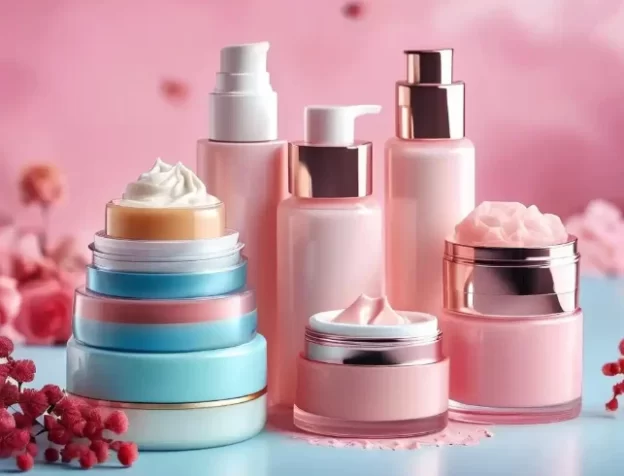
This is the alternative I point toward for clients who come to me looking for peptide lyophilized powder. Instead of taking a massive risk on an injectable product that can’t be legally exported, why not put that same “peptide” concept into a cream? The contract manufacturers in Baiyun have mature formulations for copper peptide. They can handle everything from raw material sourcing and formula sampling to packaging matching and export documentation (COA, MSDS, non-hazardous certification). Selling in Europe? Get your CPNP notification done. Selling in Canada? File your CNF. The product itself is fully compliant, and the profit margins are far healthier than anything you’d make selling gray-market freeze-dried powder.
I work with a legitimate cosmetics factory that specializes in custom formulation. Whatever finished product formula you need, the factory can work from your formula to produce the best possible version of your product. I’ve published a full on-site factory audit report on my website—if you’re interested, you can check it out here: Private Label Skincare Manufacturer
If you’re interested in developing your own custom cosmetics in China, I think Baiyun will genuinely surprise you. But if you’re just looking for injectable lyophilized powder, I’d suggest sourcing it from a country other than China.
4. My Personal Advice: How to Avoid the Traps in Baiyun
Cosmetics is my core product category. Because the industrial cluster is right in my backyard, it’s become the backbone of my sourcing agency business. Let me finish with a few pieces of personal advice. None of this is customs regulation—it’s hard-won experience paid for with real money.
Inspect the factory, and pay attention to the details. Sitting in a conference room drinking tea for an hour won’t tell you anything. Go look at the filling room’s air cleanliness test records. Check whether the raw material warehouse has proper temperature zoning. Look at whether the packaging materials are stored neatly. Hell, smell the raw material warehouse—if there’s a sharp chemical odor, that factory probably has a raw material management problem.
Lab samples and mass production are not the same thing. Samples are hand-mixed by lab engineers. Mass production comes out of a reactor churning dozens of kilograms at a time. There will always be slight differences in color, viscosity, and scent. Write an “acceptable tolerance range” into your contract—it’ll save you a lot of arguing later.
Don’t chase the lowest price. Pricing in Baiyun is already pretty transparent. If Factory A quotes 30% lower than Factory B for the same formula, it’s not because Factory A has a heart of gold—it’s because they’re cutting costs where you can’t see: lower-purity raw materials, thinner bottle walls, sloppier filling conditions. Sell that product in the US or EU, and the moment you get a complaint about allergies or microbial contamination, the cost of compensation will eat whatever you thought you saved.
Leave yourself a safety net on payment terms. The standard arrangement is 30% deposit, with the balance paid after pre-shipment inspection. If the order is big enough, you can hire a third-party inspection company, but the fees aren’t cheap. A lot of my clients have me watch the production line instead, because I know which links in the process are most likely to go wrong.
5. Final Word
In Baiyun, you can buy the most cost-effective compliant cosmetics in the world, but don’t expect to source injectable peptides. The difference between those two things is the dividing line between a business that lasts and one that doesn’t.
If you’re dealing with any of this—factory audits, formula confirmation, production scheduling, quality inspection, export documentation, logistics coordination—or if you want to explore custom peptide cream formulations, or you’re overseas and need someone to keep an eye on your production line in Baiyun so nothing goes sideways, reach out to me.
I’m MR. TAN. I do the ground-level agency work. You don’t need to fly over here—I’ll watch your back on the ground.
If you’re interested, contact me through my website or leave a message here. Let’s talk about your product.
📝 Personal Note From Tan:
Thank you for reading my factory field report. I spent hours on-site at this facility to bring you the unfiltered truth, because I believe overseas buyers deserve absolute transparency.
I am not a giant, cold sourcing corporate. I am an independent, on-demand boots-on-the-ground sourcing agent based right here in Guangdong. I am actively looking for long-term procurement partnerships, and frankly, I need and value this work.
My service fee is highly competitive because I keep my overhead low and refuse any hidden factory kickbacks—I fight 100% for your profit margins and quality protection. If you need someone honest to audit factories, negotiate bottom prices, or oversee production deadlines in China, please read my story on my [ABOUT ME] page or drop me a line directly. Let’s build something real together.