
In international trade, many overseas buyers discover suppliers on Alibaba, Made-in-China, or at the Canton Fair. The initial communication is smooth, the exhibition booth looks impressive, the sample arrives in pristine condition, and the buyer confidently wires a 30% deposit. Months later, however, they are often met with indefinite shipping delays, mass-produced goods that bear little resemblance to the initial sample, or a supplier that simply vanishes.
As a China sourcing agent, MR. TAN is deeply rooted in Guangdong’s manufacturing heartland (Guangzhou, Foshan, Dongguan, Shenzhen, and Zhongshan), frequently visiting all kinds of factory workshops for clients. In reality, slick English websites, 3D virtual showrooms, and glossy sample catalogs are often just “filters” suppliers present to the outside world.
To help overseas brand owners see through the surface and lock down truly reliable Chinese source supply chains, I have compiled this battle-tested verification system combining online desktop due diligence with on-site factory audits. It is packed with real experience and practical insights, and I hope it helps you.
Why Overseas Buyers Must Audit Suppliers Before Paying Deposits
Cross-border procurement carries inherent risks stemming from information asymmetry and geographical distance. Skipping upfront verification frequently leads buyers into three common traps:
- Trading intermediaries masquerading as direct manufacturers: Pure trading companies often operate out of commercial office buildings while branding themselves as full-scale manufacturing plants. They add middleman markups, possess zero control over actual production schedules or quality standards, and shift blame between parties when defects occur.
- The “Golden Sample” vs. mass production disconnect: The sample you received may have been manually refined over several days by a master technician in a dedicated prototyping lab—or even outsourced from a premium third-party vendor. The actual mass production workshop, by contrast, may lack standardized processes, leading to uncontrolled tolerances and systemic defects.
- Sudden supply chain collapses and financial insolvency: Some factories carry substantial debt or pending litigation; a buyer’s deposit can be frozen by court orders the moment it hits the supplier’s bank account. Other facilities operate without required environmental or fire safety compliance, leaving them vulnerable to sudden government shutdowns mid-production.
Phase 1: Online Desktop Due Diligence (Filter 80% of High-Risk Suppliers at Low Cost)
Before commissioning samples or booking flights for on-site visits, overseas buyers can utilize official Chinese regulatory databases and commercial intelligence tools to execute a thorough preliminary screening.
1. National Enterprise Credit Information Publicity System (GSXT)
Operated by China’s State Administration for Market Regulation (SAMR), this is the official legal registry for all domestic entities:
- Verify legal corporate names and Unified Social Credit Codes: Confirm whether the Chinese and English business licenses provided match official government records.
- Examine the registered Business Scope (经营范围): Check specifically for operational terms like “Production, Processing, Manufacturing” (生产、加工、制造). If the scope is limited to “Sales, Wholesale, Import & Export” (销售、批发、进出口), the entity is legally classified as a trading intermediary, regardless of marketing claims.
- Paid-in Capital vs. Registered Capital: A shell company with 50 million RMB in subscribed capital but 0 RMB in paid-in capital carries a vastly different risk profile compared to an established enterprise with verified paid-in funds.
- Abnormal Operations Registry: Check if the entity is listed for non-compliance, such as an inability to be contacted at its registered address or failing to submit mandatory annual reports.
2. QiChaCha / TianYanCha (Commercial Credit Big Data)
These platforms provide comprehensive corporate mapping and operational metrics:
- Corporate structure and Ultimate Beneficiary Owners (UBO): Identify the controlling shareholders and check for sister factories, defunct entities, or related legal disputes.
- Intellectual Property and Patents: Determine whether the supplier’s claimed “proprietary patents” are substantive Invention Patents (发明专利) or easily registered Design Patents (外观设计专利), and verify if the patent owner is the factory entity itself.
- Social Security Headcount: This metric directly reveals actual company size. If a supplier claims to employ 200 factory workers but official records show social security payments for only 3 staff members, their true operational scale becomes immediately apparent.
3. China Enforcement Information Online
This judicial database reveals pending financial distress and litigation risks:
- Enforced Persons Records (被执行人): Check if the enterprise or its legal representative has open court enforcement orders regarding unpaid debts or contract breaches.
- Dishonest Judgment Debtors List (失信被执行人 / “Laolai”): Entities on this blacklist face high-consumption restrictions due to defaulted liabilities. Wiring funds to these suppliers carries an exceptionally high risk of total loss.
4. Credit China (信用中国)
This platform monitors administrative and regulatory compliance:
- Administrative Penalties: Filter for environmental violations (e.g., illegal wastewater discharge), fire safety enforcement orders, or municipal quality inspection failures. Facilities with chronic environmental violations represent severe shutdown risks.
- Tax Compliance Ratings: Ratings of Grade A or B reflect sound fiscal health, whereas lower or irregular tiers indicate potential tax compliance and invoicing risks.
The Reality of DIY Verification vs. MR. TAN’s $29.9 Fast-Track Check
While these databases are public, foreign buyers often run into practical roadblocks:
- The platforms operate exclusively in Chinese with complex legal and financial terminology.
- Systems require identity verification via mainland Chinese (+86) mobile numbers.
- Matching an English trade name to its exact registered Chinese corporate title can be challenging without local expertise.
To solve this, we offer an accessible Online Supplier Fast-Track Verification Service:
MR. TAN Online Fast-Track Due Diligence — $29.9 USD / Supplier
Provide us with your supplier’s business card, company name, or license. We will cross-reference all four official Chinese databases and commercial intelligence systems to deliver a comprehensive English Background Verification Report (covering entity classification, manufacturing license authenticity, legal/debt liability risks, actual workforce scale, and custom inquiry checks).
Phase 2: On-Site Factory Audits (The Anchor for Substantial Orders)
Certain critical operational realities cannot be evaluated on paper; they require physical inspection on the factory floor.
1. Business Entity & Authenticity Verification (Preventing Shell Fronts)
- Signboard and Registration Consistency: Verify that external perimeter signboards, facility plaques, and original business licenses, corporate bank permits, and environmental impact assessments match completely.
- Property Ownership and Lease Stability: Review the premises lease agreement or ownership deed. An expiring lease combined with relocation disputes poses an immediate risk of mid-production disruption.
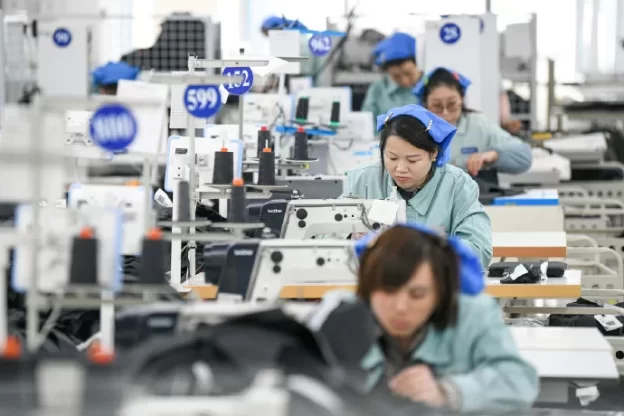
- Personnel and Factory Uniforms: Observe whether workshop staff wear standardized uniforms and identification badges bearing the target company’s name. Check whether accompanying sales reps appear unfamiliar with workshop supervisors—a frequent indicator of trading agents borrowing third-party production lines for client visits.
2. Manufacturing Capability & In-House Process Ownership
- Process Flow Mapping & Subcontracting Audits: Map the entire manufacturing sequence to distinguish which stages are handled in-house and which are outsourced (e.g., surface finishing, electroplating, heat treatment, powder coating, or precision CNC machining). Review their Approved Vendor List (AVL) and incoming quality inspection procedures for external processes to prevent downstream defects.
- Equipment Inventory and Operational Utilization: Examine key production machinery (stamping presses, injection molders, die-casting units, CNC centers) for brand quality, machine age, and active operation. Ensure machines are running rather than sitting idle as stage props, and inspect daily Total Productive Maintenance (TPM) logs.
- Actual Capacity & Bottleneck Calculation: Calculate production cycle times, single-line daily output, and active operating shifts. Evaluate whether a high-volume container order would exceed their capacity threshold and force unapproved subcontracting to low-tier workshops.
3. Quality Management System (QMS) Floor Verification
Look past wall-mounted ISO certificates and inspect physical shop-floor controls:
- IQC (Incoming Quality Control): Inspect raw material acceptance standards, original Mill Test Certificates (MTC), and receiving logs. Check whether raw materials undergo documented testing for alloy grade, hardness, and thickness tolerances.
- IPQC (In-Process Quality Control): Confirm workstation Standard Operating Procedure (SOP) adherence, First Article Inspection (FAI) tags, and the authenticity of real-time line patrol inspection records.
- Material Review Board (MRB) & Defect Isolation: Check whether non-conforming, scrap, and rework areas feature prominent red markings, physical enclosures, or lockable barriers to prevent defective units from accidentally entering final packaging lines.
4. Export Packaging & Shipping Compliance
- Protective Packaging and Humidity Defense: Inspect corrugated carton ply ratings, silica gel desiccant placement, and anti-static polybag protection. Verify the presence of drop-test apparatus and box compression test equipment.
- Shipping Marks and Barcode Accuracy: Verify layout, legibility, and placement for main marks, side marks, mandatory Country of Origin labeling (MADE IN CHINA), and retail UPC barcodes.
- Palletization and Container Loading Infrastructure: Ensure wooden pallets carry compliant, legible IPPC heat-treatment stamps, or use certified composite/plywood pallets. Verify that the loading dock features functional dock levelers, operational forklifts, and rain canopies for weather-protected container loading.
5. EHS, Environmental, and Labor Compliance
- Fire Safety & Plant Protection: Ensure emergency exits and fire lanes remain completely unobstructed. Check that fire extinguisher pressure gauges sit firmly in the green zone with up-to-date monthly inspection tags, and verify that high-risk machinery features photoelectric safety sensors.
- Environmental Licensing: Confirm active environmental permits for exhaust, industrial wastewater, and hazardous waste storage alongside licensed third-party disposal contracts to prevent sudden administrative shutdowns during environmental enforcement sweeps.
- Labor Compliance: Verify the strict absence of underage labor (under 16 years of age) and cross-examine electronic time-card logs to evaluate extreme overtime or wage arrears risks.
Field-Tested Probing Techniques of an Experienced Agent
Seasoned auditors assess a supplier’s true operational baseline through subtle, targeted spot-checks:
- Random Shop-Floor Worker Inquiries: Select 1–2 active line operators and ask directly: “If this piece shows a surface defect, who do you hand it off to?” or “What is the exact dimensional tolerance on this step?” This reveals whether the workforce operates by casual guesswork or adheres strictly to documented SOPs.
- The 30-Minute Reverse Material Traceability Test: Select a random finished carton ready for shipment from the packing area. Require the factory management to produce the associated final QC inspection sheet, in-process patrol logs, first article approval, and raw material mill certificate/warehouse intake log within 30 minutes to verify actual traceability.
- Unedited Full-View Visual Documentation: Capture unedited video and high-resolution photography covering facility entrances, operating machinery, equipment nameplates, and defective holding zones to provide buyers with an unfiltered record of the facility.
Case Studies & Confidentiality Policy
To review examples of real-world factory inspections, explore our published audit records:
👉 View Actual Factory Audit Reports: https://www.mrtan.net/factory-audit-reports/
Confidentiality Notice: In accordance with non-disclosure agreements (NDA) and client privacy policies, our publicly accessible reports display sanitized operational summaries with sensitive commercial identifiers removed. Formal, commissioned audit deliverables provide full access to unedited high-definition video walkthroughs, macro defect photography, capacity calculations, and objective risk ratings.
The 3-Step Supply Chain Risk Control Roadmap
[Screening Phase] Compile a list of 10+ prospective suppliers
   │
   ▼
[First Line of Defense] Run 4-database online checks / Book MR. TAN's $29.9 Fast-Track Check
   │ (Eliminates 80% of shell intermediaries, blacklisted debtors, and unlicensed shops)
   ▼
[Sample Phase] Order physical samples from 2–3 shortlisted candidates for precision testing
   │
   ▼
[Second Line of Defense] Commission MR. TAN for an on-site factory audit before paying the deposit
   │ (Verifies legal entities, true manufacturing capacity, shop-floor QC, and export readiness)
   ▼
[Final Execution] Sign a robust bilingual purchase contract, seal golden samples, and deposit safely
Independent Sourcing Representation in China
I maintain an independent buying agent philosophy: I do not represent factories, nor do I accept supplier commissions or kickbacks. My sole responsibility is protecting the capital, quality standards, and supply chain security of overseas buyers.
Whether you need a $29.9 online supplier due diligence check for initial vendor screening or require a thorough on-site factory audit in Guangdong prior to major production runs, feel free to reach out.
👉 Learn More About Our Factory Audit Services
💬 Inquiries welcome via our “Contact Mr. Tan” page.
📝 Personal Note From Tan:
Thank you for reading my factory field report. I spent hours on-site at this facility to bring you the unfiltered truth, because I believe overseas buyers deserve absolute transparency.
I am not a giant, cold sourcing corporate. I am an independent, on-demand boots-on-the-ground sourcing agent based right here in Guangdong. I am actively looking for long-term procurement partnerships, and frankly, I need and value this work.
My service fee is highly competitive because I keep my overhead low and refuse any hidden factory kickbacks—I fight 100% for your profit margins and quality protection. If you need someone honest to audit factories, negotiate bottom prices, or oversee production deadlines in China, please read my story on my [ABOUT ME] page or drop me a line directly. Let’s build something real together.