

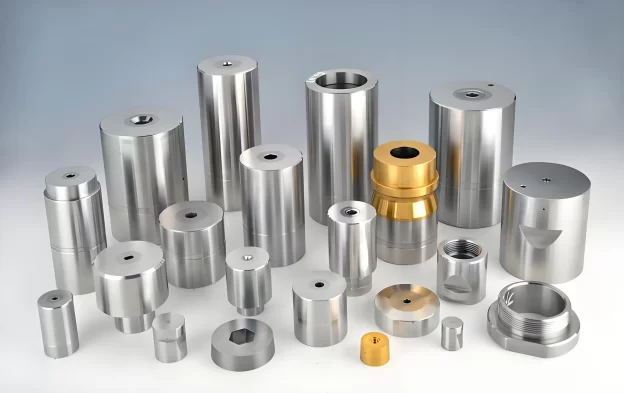
In industrial manufacturing, purchasing standard screws or off-the-shelf fasteners is straightforward. However, ordering custom non-standard hardware components online is a completely different story. A single tolerance callout on a drawing, an anti-corrosion requirement, or a thread specification can easily turn into a supply chain nightmare during final assembly.
I am MR. TAN, a professional sourcing agent based in Foshan, Guangdong, China. If you are considering outsourcing custom non-standard hardware production to Chinese factories, this article breaks down the entire sourcing workflow, technical pitfalls, and export compliance requirements from the perspective of Foshan’s local industrial cluster and my own hands-on experience. Spending ten minutes reading this guide may save you thousands of dollars and endless headaches down the line.
1. Why Sourcing Custom Hardware Components Leads You to Foshan, Guangdong
In China’s manufacturing landscape, Foshan, Guangdong (especially iconic hardware towns like Danzao in Nanhai and Leliu in Shunde) serves as a world-renowned hardware production hub.
The true strength of this region lies in its ultra-dense “30-minute industrial ecosystem”:
- Raw Material Supply: Virgin 304/316 stainless steel, high-grade aluminum profiles, and brass rods can be sourced on demand.
- Complete Processing Ecosystem: 5-axis CNC precision machining, high-precision stamping, cold heading, die casting, and various surface treatments are all concentrated within a radius of just a few dozen kilometers.
As we have frequently mentioned in our previous factory audit reports regarding Danzao as the “Capital of Hardware,” this industrial cluster effect means that whether you need complex industrial structural components, high-precision valve parts, or specialized fasteners, Foshan factories can react rapidly. However, the prerequisite is finding a qualified, quality-aligned source factory in the supply chain.
2. My Quality Philosophy: Why I Prefer “High-Grade Base Materials Over Cheap Electroplating”
My clients are primarily based in regions like the United States, Canada, Europe, and Australia. Overseas distributors and end-users in these markets demand strict compliance regarding component precision, service life, and assembly experience.
Therefore, when assisting clients with material selection and manufacturing process planning, I strictly adhere to two principles forged through real-world practice:
1. Beware of How Inferior Electroplating Destroys Thread Tolerances and Go/No-Go Gauge Inspections
When processing non-standard components, many overseas buyers only focus on the initial machining tolerances specified on the drawings, ignoring the physical thickness added by post-machining electroplating layers.
- Thread Tolerance Failure: If plating processes (such as chrome or zinc plating) are poorly controlled, uneven thickness occurs. Threads that originally passed precision CNC machining will fail post-plating: the “Go” gauge won’t enter, or the “No-Go” gauge won’t stop. Once shipped overseas, these parts cannot be assembled.
- Peeling and Pitting Over Time: To achieve rock-bottom prices, some underground workshops skip degreasing and rust-removal pre-treatments, applying extremely thin plating. After weeks of humid ocean transport and 3 to 6 months in warehouse storage, the surfaces yellow, spot, or even suffer from widespread plating peeling and flaking.
2. Prioritize High-Grade Virgin Base Materials
I strongly advise clients to directly use high-quality base materials (such as premium 304/316 stainless steel, precision brass, or high-grade aluminum alloys).
After precision CNC machining, wire drawing, mirror polishing, or anodizing, high-grade raw materials showcase a solid, premium metallic texture without relying on heavy electroplating to cover up imperfections. More importantly, it eliminates the risk of plating peeling at the root and ensures that screw threads strictly pass Go/No-Go gauge tests.
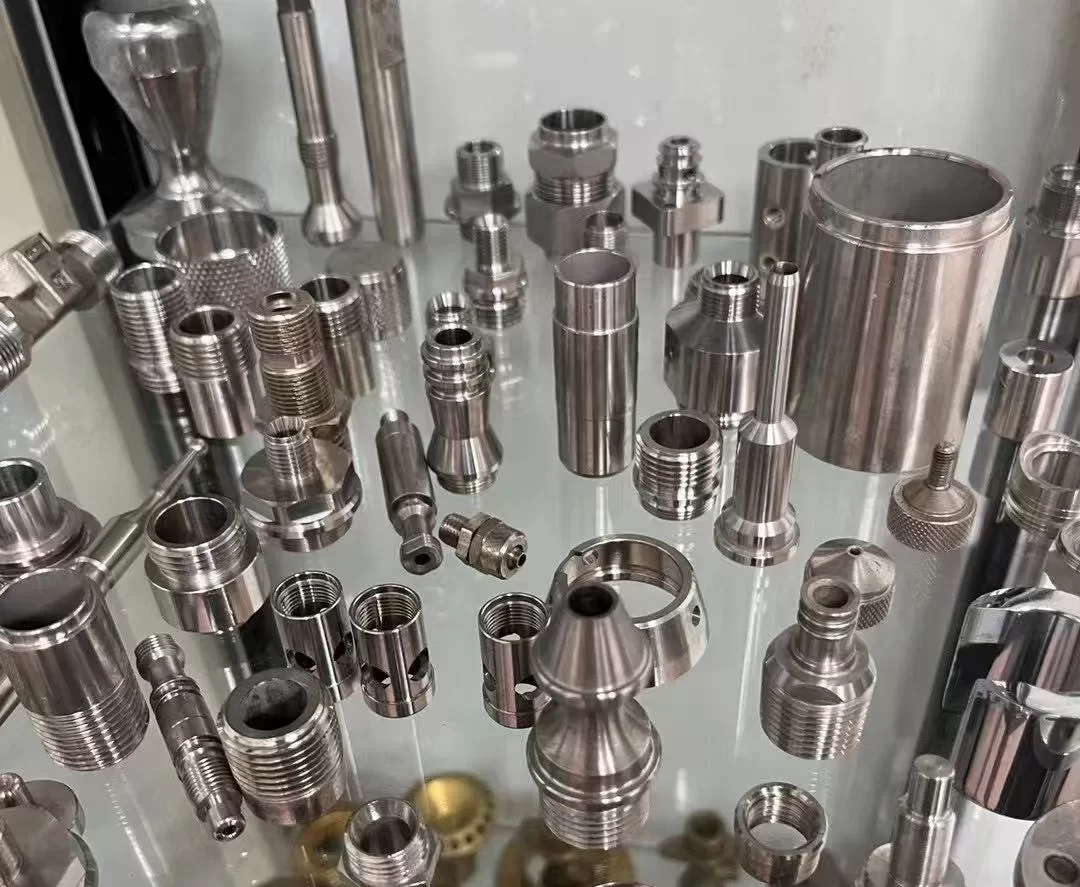
In international trade, if non-standard parts face quality returns or claims overseas, expensive round-trip freight, customs duties, and customer compensation will instantly wipe out all profits. Therefore, I explicitly decline orders from buyers who blindly pursue extreme low prices at the expense of quality—we refuse to get entangled in endless post-delivery disputes.
3. From Drawing to Finished Part: 4 Key Steps to Customizing Non-Standard Hardware
To ensure the components delivered to you are ready for immediate assembly, a standardized custom workflow should follow these steps:
- Drawing Conversion & Thread Clearance Reservation: Define 2D/3D drawing tolerances clearly (the cost difference between ±0.01mm and ±0.1mm is massive). If electroplating or coating is mandatory, thread tolerances must be reserved in advance during the CNC machining stage.
- Material Test Reports & Surface Standards: Request Material Test Reports (MTR) and define clear surface treatment specifications, such as coating thickness and salt spray testing hours (e.g., 48-hour or 96-hour neutral salt spray test).
- Sampling & First-Article Go/No-Go Gauge Verification: Before mass production, physical prototyping, fit-testing, and Go/No-Go thread gauge double verification must be conducted.
- Factory Matching & Machinery Capability Audit: Partner with legitimate manufacturers boasting stable inspection capabilities. In Foshan, our long-term partner Foshan Precision Industrial Parts & Hardware Components OEM Factory is equipped with complete multi-axis CNC machining centers, testing equipment, and a rigorous QC system to guarantee batch-to-batch consistency.
4. Export Compliance & Customs Pitfalls (Special Warnings for Developed Markets)
To ensure your custom hardware smoothly clears customs and arrives at your warehouse, keep the following regional compliance requirements in mind:
- European Union (EU):
- RoHS 3 Directive: Strictly restricts heavy metals such as lead, mercury, and hexavalent chromium. Inferior surface coatings or recycled copper alloys frequently exceed lead or chromium limits.
- REACH Regulation: Pay close attention to Substances of Very High Concern (SVHC) screening in industrial components.
- United States (US):
- California Proposition 65: If parts are used in consumer goods or indoor hardware, lead and heavy metal compliance declarations are critical.
- HS Code Classification & Section 301 Tariffs: Custom hardware must be classified accurately under correct HS Codes to avoid customs detention or punitive tariffs caused by ambiguous declarations.
- Canada & Australia (CA & AU):
- Maritime Rust Prevention & Packaging: Ocean freight crossing the equator involves extreme humidity. Non-standard metal parts must be packed with VCI anti-rust paper or vacuum packaging. Shipments to Australia containing wooden pallets must strictly adhere to IPPC ISPM 15 fumigation standards.
- Domestic Environmental Compliance Risks in China (The Hidden Trap):
- China enforces strict environmental protection regulations on surface treatments (electroplating, pickling, anodizing). Working with uncertified, small workshops carries a high risk of abrupt factory shutdowns during government environmental inspections, delaying orders indefinitely. Always verify the source factory’s environmental emissions permits.
Sourcing custom non-standard hardware across borders is never about blindly comparing low prices on a website; it is about establishing a controllable system for materials, tolerances, and quality control at the source of the supply chain.
If you are overseas and lack the time or energy to visit factories in China and oversee technical details in person, MR. TAN can act as your dedicated, boots-on-the-ground team in Guangdong. We provide end-to-end local support: factory qualification audits, drawing & thread gauge review, real-time production monitoring, pre-shipment AQL sampling & Go/No-Go inspection, through to export customs clearance and logistics coordination.
Feel free to reach out with your engineering drawings, material specifications, and purchasing quantities. Let’s work together to make sure every single component is made with precision and delivered with complete peace of mind.
📝 Personal Note From Tan:
Thank you for reading my factory field report. I spent hours on-site at this facility to bring you the unfiltered truth, because I believe overseas buyers deserve absolute transparency.
I am not a giant, cold sourcing corporate. I am an independent, on-demand boots-on-the-ground sourcing agent based right here in Guangdong. I am actively looking for long-term procurement partnerships, and frankly, I need and value this work.
My service fee is highly competitive because I keep my overhead low and refuse any hidden factory kickbacks—I fight 100% for your profit margins and quality protection. If you need someone honest to audit factories, negotiate bottom prices, or oversee production deadlines in China, please read my story on my [ABOUT ME] page or drop me a line directly. Let’s build something real together.