
The longer I work in dropshipping and fulfillment, the more frequently I run into the exact same issue. In the beginning, I had the patience to explain and advise people step-by-step. Now, honestly, I am a bit exhausted. After receiving an inquiry from a European client today, I decided to put together this article to talk about how dropshipping beginners in the dropshipping industry should properly approach choosing and managing suppliers.
The image below is a screenshot from my WhatsApp conversation (I have excluded and masked any sensitive client information). Looking at this image, can you see what the problem is?
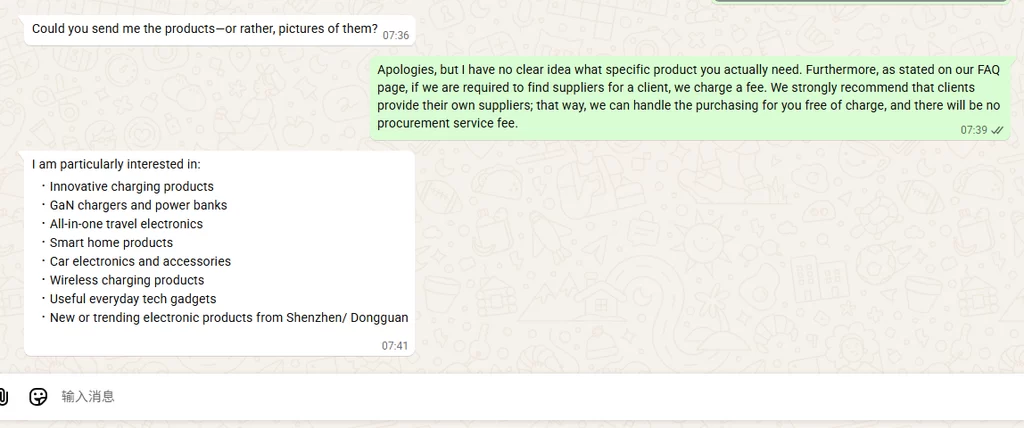
Whenever I see messages like this now, my feelings are complicated. It’s not that we don’t want to take business, but this kind of “completely hands-off” start fails nine times out of ten, almost always ending in a quiet failure. Today, let’s dig into this topic and lay all the cards on the table for those entering or currently running independent stores: A dropshipping agent is your backend support and fulfillment multiplier, but we should never be your all-in-one supply chain manager.
1. Why Do We Strongly Recommend You “Bring Your Own Supplier”?
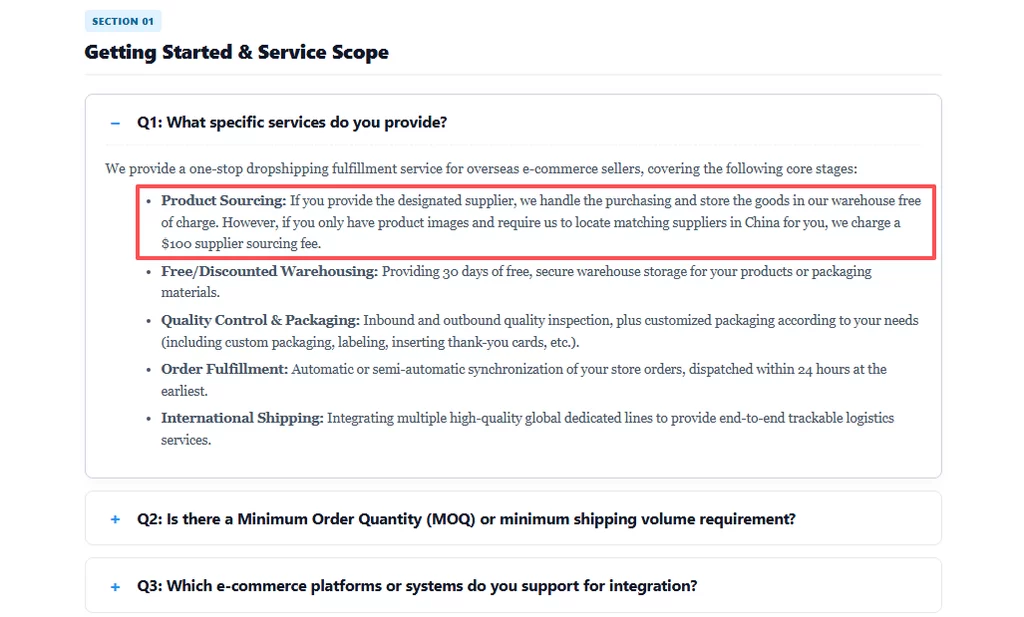
Whenever a new client contacts us, my first piece of advice is always: Try to find the supplier yourself, agree on the baseline pricing, and then introduce the factory to us. I have already written this directly into our Dropshipping FAQ page.
Many clients might not understand and think, “Isn’t finding factories your job?” In reality, it isn’t. There are a few very realistic reasons behind this:
1. Product Selection and Knowing Your Product Is Your Only Lifeline
Many beginners probably think: “Tan, you’re on the front lines of China’s industrial belts every day and see so much inventory. You know what sells best—why don’t you pick for me?”
To anyone thinking this, I have one honest question: If I were really that capable of predicting which product would explode overseas next week, why wouldn’t I just launch my own Shopify store and sell it myself?
Everyone knows how low the barrier to entry is for setting up an independent store. The profit from running ads and selling products is far higher than the modest service fees we earn by packing and labeling boxes in a warehouse all day. The fact that we stay in the backend fulfillment space means our core strength lies in supply chain execution, not frontend retail marketing.
More importantly, only when you have personally discussed the product details and procurement terms with the factory do you truly “know your product.” When an overseas customer receives the item and files a complaint or leaves a negative review, you can immediately identify which step went wrong—instead of running to me asking why this bad review happened. Outsourcing the core understanding of your product entirely to a third party is the most irresponsible thing you can do for your own business.
2. Bringing Your Own Supplier Completely Removes the Suspicion of Hidden Markups
As an agent operating in today’s business environment, trust is both the most fragile asset and the hardest to build.
My stance with clients has always been 100% clear: whatever ex-factory price the supplier gives us, we pass directly to you. We do not take markups on the product, nor do we profit off international shipping rates or packaging materials. We operate purely on transparent order fulfillment service fees.
Still, human nature is prone to doubt. If I find the factory for you and quote $10 per unit, will you trust me unconditionally? Or will you wonder: “Could this only cost 7 RMB on 1688? Is Tan taking a cut in between?”
If you bring your own supplier, that suspicion disappears completely. You know whose goods they are, what the factory price is, and what packaging standards were agreed on. We simply serve as your receiving partner in China—handling inspection, warehousing, packing, and dispatch. With all numbers open on the table, both sides have complete clarity, which is the only way a partnership lasts.
3. You Get Completely Free Procurement Handling
As long as you provide the contact details of the factory or supplier you have negotiated with, our daily purchasing execution—placing domestic orders, following up on lead times, and receiving inventory—is entirely free of charge. We don’t have to waste time doing blind market comparisons, you receive direct factory pricing, and both of us save communication overhead. This is the healthiest operating model for everyone involved.
2. If You Insist on Us Finding Suppliers, It’s Not Impossible—Here’s How
We understand that overseas clients may face language barriers or time zone differences that make communicating directly with Chinese factories inconvenient. Can we help?
Yes, we can, but we never do it for free. Currently, if we need to source a source factory from scratch, we charge a tentative $100 sourcing service fee.
This fee isn’t meant to be a profit center; it exists to solve a few very real operational realities:
- Sourcing is not as simple as “reverse image searching.”Many people assume finding a factory just means taking a screenshot and uploading it to 1688, taking two minutes. True supply chain screening requires verifying whether the company is an actual factory or a middleman trading firm, evaluating their operational capabilities, and testing whether their communication fits as a viable partner. This requires significant labor and communication time. The task itself isn’t impossible, but it is heavily time-consuming.
- Filtering out casual inquiries to focus on serious sellers.If we offered free factory sourcing to everyone, we wouldn’t get any actual work done during the day—our team would be buried under low-intent inquiries. More than half of new inquiries simply drop a few images, state what they want to sell, and expect us to provide product pricing, weight, dimensions, and total landed costs. Then, after we do all that heavy lifting and send over a full report, we often don’t even get a basic “received” in response. This burns our operational capacity and damages our credibility with factories. A $100 fee sets a clear threshold: it supports sellers who are genuinely committed to executing their business while filtering out impulsive ideas.
- Clear boundaries and avoiding unnecessary disputes.Once the service fee is paid, we take full responsibility for our work. We provide objective factory background details, verified price quotations, and whatever supplementary data you need. However, the final decision and responsibility for selecting which supplier to use remains entirely with you. This ensures accountability stays clear if manufacturing quality fluctuates down the line.
3. What Is the Real Value of a Fulfillment Agent?
After hearing all of this, some people might think we sound arrogant, or ask: “If you won’t handle these things for me as an agent, why should I work with you?”
My answer is simple: Our value lies in helping you scale your supply chain from 1 to 100, not running your trial-and-error experiments from 0 to 1.
The “0 to 1” phase—product selection and validating your first supplier—is the most critical phase of e-commerce. You must be personally involved. Once your orders start scaling overseas, however, our true advantages come into play:
- Building a Solid Quality Control (QC) Barrier: When goods arrive at our warehouse, we open the boxes to inspect appearance, verify measurements, and conduct basic functional/power tests (deep-level inspections are also available as paid add-ons). We intercept defective units domestically and return them to the supplier, preventing them from traveling halfway across the world to an overseas customer and turning into an expensive refund or negative review.
- Supplier Optimization: When your volume stabilizes at dozens or hundreds of orders a day, I am more than happy to sit down and review your setup. Based right here in the Pearl River Delta industrial hub, we leverage local networks to cross-compare peer factories, helping you secure better suppliers and lower wholesale costs.
- Private Label Customization: We help you customize packaging boxes, manuals, logo stickers, and personalized insert cards—upgrading your orders from generic parcels into a legitimate, branded customer experience.
Final Thoughts
Publishing this article might make some people feel that we are rigid, but I chose to share it anyway. I want to remain accountable to my own business and to the clients who genuinely want to build a real dropshipping operation.
Clear roles and mutual trust are the only way to build a comfortable, long-term working relationship.
Finally, I strongly encourage new clients to review our Dropshipping FAQ first. If the information there still leaves you with questions, feel free to reach out directly, and I will be happy to answer them in real time.
📝 Personal Note From Tan:
Thank you for reading my factory field report. I spent hours on-site at this facility to bring you the unfiltered truth, because I believe overseas buyers deserve absolute transparency.
I am not a giant, cold sourcing corporate. I am an independent, on-demand boots-on-the-ground sourcing agent based right here in Guangdong. I am actively looking for long-term procurement partnerships, and frankly, I need and value this work.
My service fee is highly competitive because I keep my overhead low and refuse any hidden factory kickbacks—I fight 100% for your profit margins and quality protection. If you need someone honest to audit factories, negotiate bottom prices, or oversee production deadlines in China, please read my story on my [ABOUT ME] page or drop me a line directly. Let’s build something real together.